Structure for Better Design Decisions.
A Workflow Built for Real Projects.

Why structure matters.
Most projects do not fail because of a lack of ideas. They fail because goals are unclear, priorities shift, and decisions are made without enough context.
A strong workflow helps create alignment early, reduce avoidable detours, and keep design connected to real outcomes.
Three areas. Six steps. One shared direction.
Understanding the challenge, shaping the direction, designing the solution, and supporting it into reality.

Experience
Discuss
Discover
Design
Define
Design
Support
Develop
Deploy
Not every project needs the same setup.
Some teams need clarity from the ground up. Others already have momentum and need support in the middle of the process.
The workflow stays consistent, but the entry point depends on your product, your team, and the challenges in front of you.
Sometimes that means shaping strategy early. Sometimes it means improving flows, refining interfaces, supporting implementation, or bringing consistency to an existing system.

Experience
Experience starts before the interface.
Before design can solve anything, the challenge needs to be understood clearly. This part of the workflow creates shared context around goals, users, constraints, and opportunities. It helps reduce assumptions early and gives the project a stronger foundation to move forward.
Discuss
Focused conversations to understand goals, challenges, constraints, and expectations.
Discover
Research and observation to uncover friction, gaps, and opportunities.
Design
Direction takes shape here.
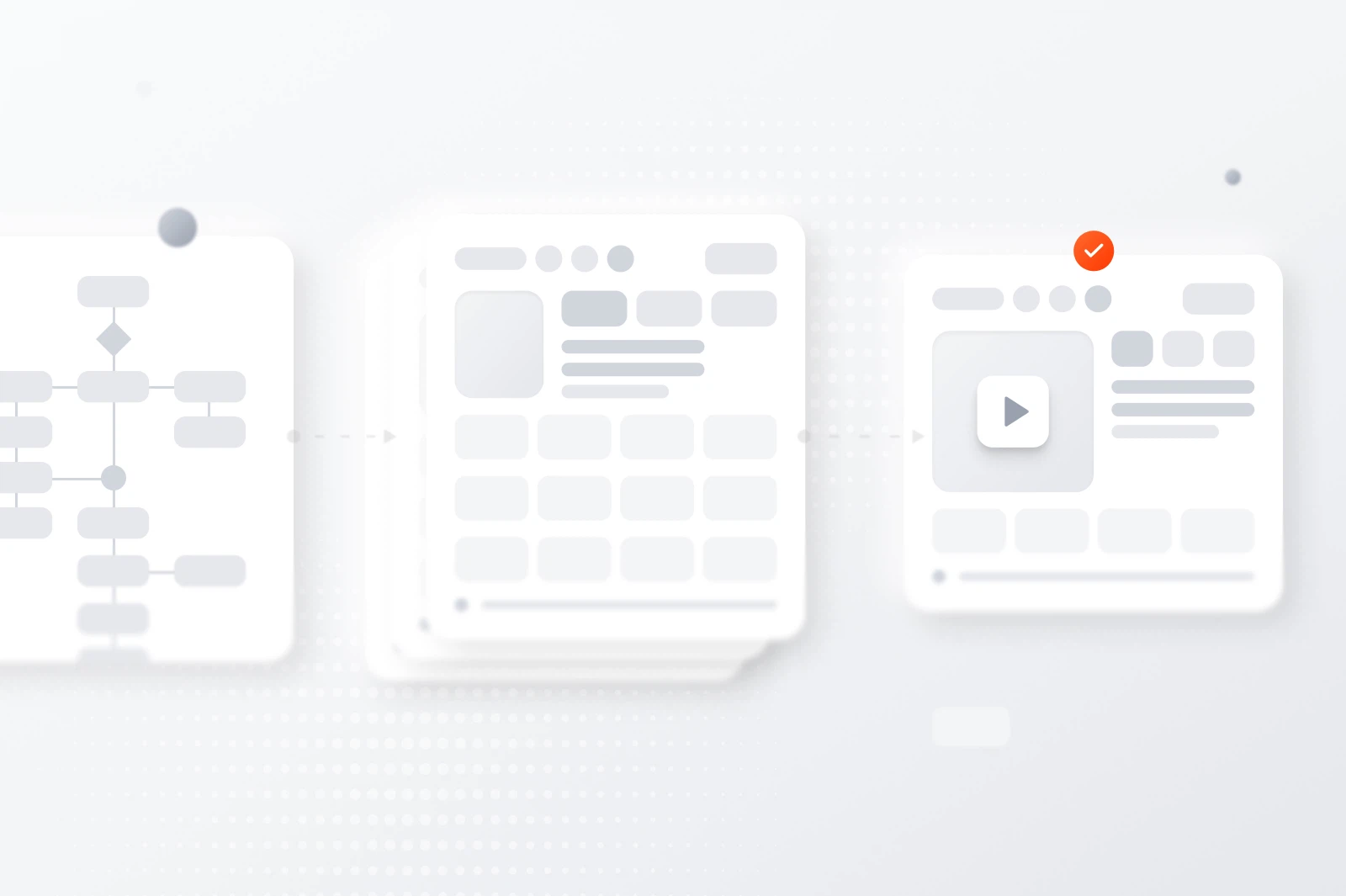
Once the challenge is understood, insights need to become structure. This phase turns context into clear priorities, stronger flows, and tangible solutions that are useful, intuitive, and consistent.
Define
We translate insights into structure by outlining priorities, user flows, and the decisions that guide the work.
Design
We turn direction into something tangible through wireframes, interfaces, systems, and prototypes built for clarity and usability

Support
Good design has to hold up in reality.
A strong concept only matters if it works in implementation and continues to perform after launch. This phase supports delivery, refinement, and long-term improvement — helping the final result stay aligned with the original intent while adapting to real-world constraints.
Develop
We support implementation, collaborate with developers, and refine details as the solution takes shape in code.
Deploy
We launch, observe, and improve — using feedback, performance, and real usage to guide what happens next.
Better structure. Better outcomes.
The value of a good workflow is not the process itself. It is what the process makes possible — more clarity, better decisions, and stronger results over time.
Clearer priorities
Less guesswork, better decisions, and a stronger sense of what matters most.
Stronger alignment
Shared context across stakeholders, designers, and developers.
Better user flows
More intuitive journeys shaped by real needs and clearer structure.
More consistent design
Interfaces and systems that feel coherent, scalable, and easier to maintain.
Smoother implementation
Better handoff, closer collaboration, and fewer avoidable gaps in delivery.
Long-term improvement
A better basis for iteration, refinement, and growth after launch.
Next Steps
Let’s take it further.
Read the background. Explore the work. Start a conversation.
Full Background
CV
Dive deeper into my background, experience, skills, and the path behind the work.

Selected Work
Portfolio
Explore a curated selection of digital products, systems, and brand-driven design work.
Let’s Talk
Contact
Have a project, need support, or looking for a design partner? Let’s start the conversation.